Week 52 – Clarity to Lead from Strategy Through Execution

Just as an athlete overcomes powerful opponents, organizations can defeat the hidden forces of waste, stress, and uncertainty by understanding operations science and using its laws to improve flow, resilience, and financial performance.
Week 51 – A Foundation for Successful Leadership

Leadership efforts are greatly weakened without an organization’s or team’s embrace of operations science. Should you try to build a bridge without understanding engineering science? That is doubtful at best. Similar chances of success occur in operations and businesses without understanding operations science.
Week 50 – Designing Resilient Operations

Everyone want their operations or project to be resilient. Very few know how to design resilience into their operations. This week we explore resilience in operations and the traits of resilient operations.
Week 49 – Science Improves Focus and Accelerates Success

Every system — factory, lab, hospital, airline, project — follows natural laws. The leaders who understand those laws lead with clarity instead of chaos. “Working better” is not about working harder — it’s about working scientifically. This week describes operations science fundamentals required for working better and their effect on teams’ efforts for improved performance.
Week 48 – Building Resilience in a Turbulent World

Listen to powerful insights from Sanjay Huprikar, Chief Global Officer, of the Global Electronics Association. Learn how leadership builds resilience in a turbulent, $6 trillion electronics industry. Discover how to drive smarter, faster, and more resilient operations.
Week 47 – From Grounded to Greatness, The Delta TechOps Story

Operations science played a key role in helping Delta TechOps rebuild from the severe disruption of Covid and, at the same time, embark on an ambitious growth plan for its maintenance, repair, and overhaul business. We summarize the compelling podcast of Mike McBride, VP of Engines and Components, and his take on the events. It provides powerful lessons on crisis management in operations.
Week 46 – Mistakes in Annual Planning

There are a couple of common, avoidable mistakes that organizations make when creating their annual operating plans. This 2-minute video describes those mistakes.
Week 45 – Batch Size Optimization

Batch size optimization decisions must consider capacity utilization, not only setup cost and inventory cost.
Week 44 – Operations Science Essentials

No manager or executive should be put in charge of operations without understanding these fundamental relationships.
Week 43 – Operations Science Supercharges Any “Go to Gemba” Effort

Operations is not a black box. You should start any gemba journey with an operations science map to guide you quickly and efficiently.
Batch Time Drives Cycle Time

Batch time is one of the major drivers of cycle time in many processes. This quick video provides a simple simulation to demonstrate the effects of batching on cycle time.
Week 42 – Manage Suppliers Better With Operations Science (3 of 3)

Once a supplier’s supplier’s strengths and weaknesses are understood from operations science-based analysis, supply chain managers can bring price into the conversation and much more easily establish a productive and mutually profitable relationship as we demonstrate.
Week 41 – Manage Suppliers Better With Operations Science (2 of 3)

Just as you would survey the ground to evaluate it as a foundation for a bridge, you should evaluate your suppliers as part of building a relationship. Operations science provides the ability to evaluate suppliers without discussing sensitive cost information.
Week 40 – Manage Suppliers Better With Operations Science (1 of 3)

Learn the secrets of supplier management success using operations science.
Week 39 – New Leaders, Start Fast!

Odds of success for managers stepping into new leadership roles are greatly improved by using operations science concepts to build rapport. See how in this week’s 2-minute video.
Week 38 – Create Innovation Culture
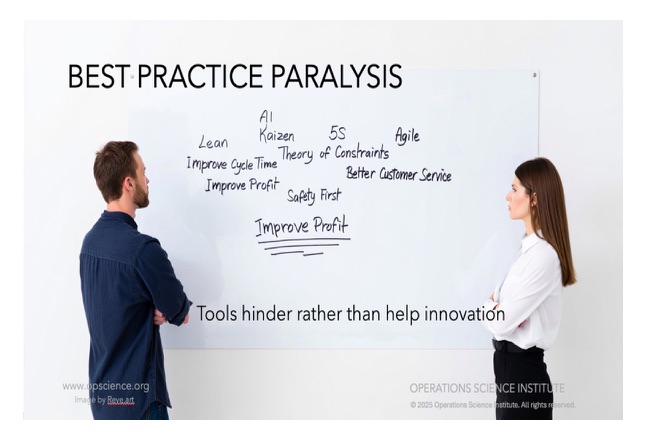
To create true, sustained innovation, start from first principles in the operations science framework. Tools and best practices come afterwards, they do not make a good foundation for innovation.
Week 37 – Sustain Success, Controls Part 2

Too often people confuse reporting with control. Here we list actual controls that will provide predictable results.
Week 36 – Sustain Success With Control

Good strategy and tactics can be wasted if proper control is not used effectively. Find out how to establish reliable control.
Week 35 – Strategy to Action: Tactics
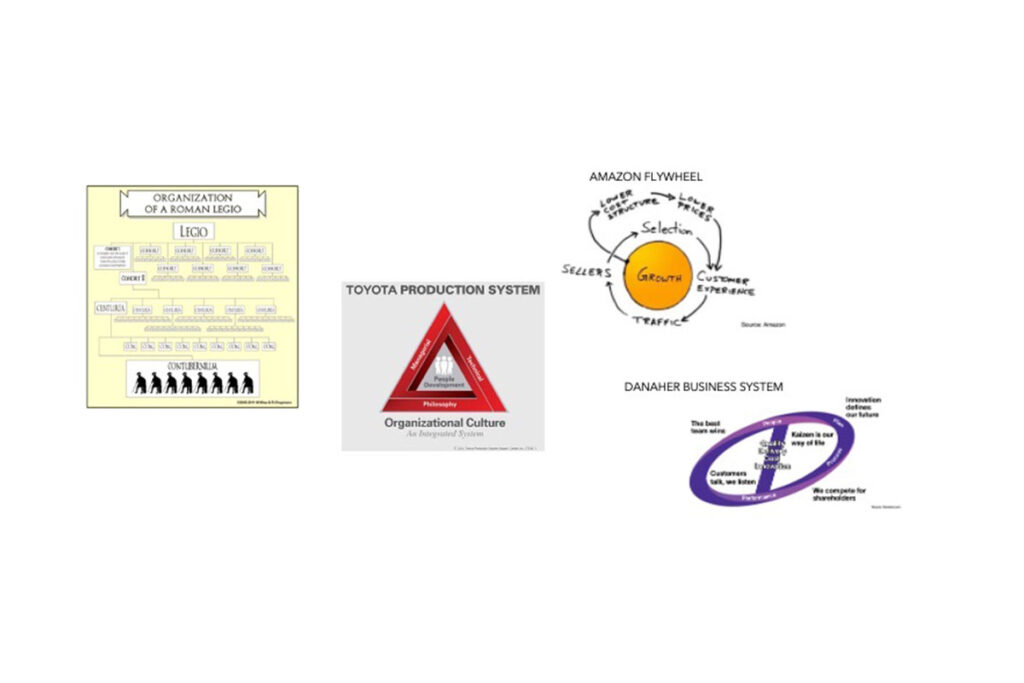
Strategy without action is daydreaming. We describe the business system framework and tactics needed to achieve successful results repeatedly and sustainably.
Week 34 – Make Strategy Work
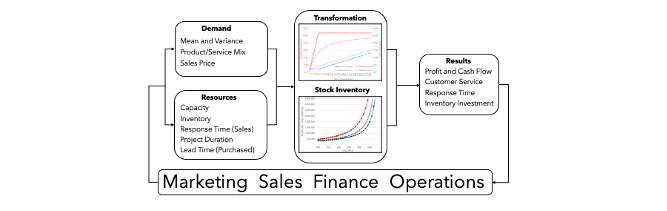
The laws and concepts of operations science are like an objective third party referee passing judgment on what strategies are or are not feasible. Operations science doesn’t care if you believe in it or not. It dictates outcomes either way.
Week 33 – Operations Science Applied

Once you have seen your operations through Operations Science Applied, you will never look at operations the same way as you did before. You will be on your way to predictable, sustainable success.
Week 32 – Inventory Management Mistakes, Finale

Safety stock is often seen as a holy grail for ensuring good customer service and optimal inventory levels. It is often miscalculated and mismanaged.
Week 31 – Inventory Management Mistakes, Part 4

In trying to keep things simple when making delivery promises to customers, companies unintentionally make planning and execution less effective and less efficient.
Week 30 – Inventory Management Mistakes, Part 3
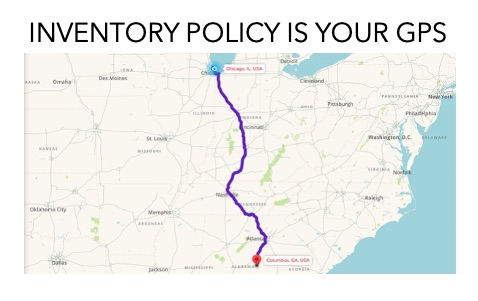
Inventory policy should use the parameters of your environment along with operations science and math to help you adjust to variability yet arrive at planned performance as expected.
Week 29 – Inventory Management Mistakes, Part 2

We have seen inventory managers and planners make the mistake of monitoring on-hand to determine how much inventory they should order. This is an incomplete approach and we describe the appropriate measure for good control.
Week 28 – Inventory Management Mistakes, Part 1

We explore a widespread error in inventory management which is very basic, very harmful to customer service and cost, and easy to fix.
Week 27 – Saving Billions with Operations Science in Engineering and Construction, Part 2

Following up with last week’s introduction to the application of operations science in Engineering and Construction projects, a case study is provided this week with specifics of application.
Week 26 – Saving Billions with Operations Science in Engineering and Construction

This week we explore one of the largest cost savings opportunities on the plant. Application of operations science to Engineering and Construction mega projects.
Week 25 – Increasing Healthcare Efficiency

St. Mary’s hospital case study showing the benefits of using operations science to better synchronize nursing resources with patient demand.
Week 24 – Baxter Saves Tens of Millions of Dollars in Operations

Operations science provided a framework to help Baxter Healthcare optimize operations and realize major performance improvements.
Week 23 – Artificial Intelligence and Operations Science

AI presents great promise and great risk. Watch this week’s video to discover how to manage the risk of AI in operations, projects, services and supply chain.
Week 22 – A 30% Increase in Throughput

The unique insights provided by an operations science flow analysis led this company to achieve a massive increase in throughput and efficiency in a couple of months.
Week 21 – How to Know if You Are in Control

Last week we were below goal. that was terrible. This week we are above goal. Terrific, pizza for everyone! Are you just reacting to noise in the system? If so, you’re just increasing variability and its associated buffering requirements and, at the same, time creating unnecessary stress for your people.
Week 20 – Details of Leading and Lagging Measures

This week we provide specific examples of leading and lagging measures. Leading measures track causes, not effects. To see the effects, track lagging measures which provide understanding of whether the causes were accurately described–true scientific thinking.
Week 19 – The Best Measures for Individuals

Measures motivate behavior. This week provides a list of important characteristics of measures used for measuring individual performance. Also provided are specific examples of these measures, including examples the average view may not have seen before.
Week 18 – The Best Measures to Measure

Don’t be overwhelmed with measures and KPIs. In the operations science framework, required measures naturally surface. There are the vital few and everything else is just window dressing.
Week 17 – How to Improve Continuous Improvement
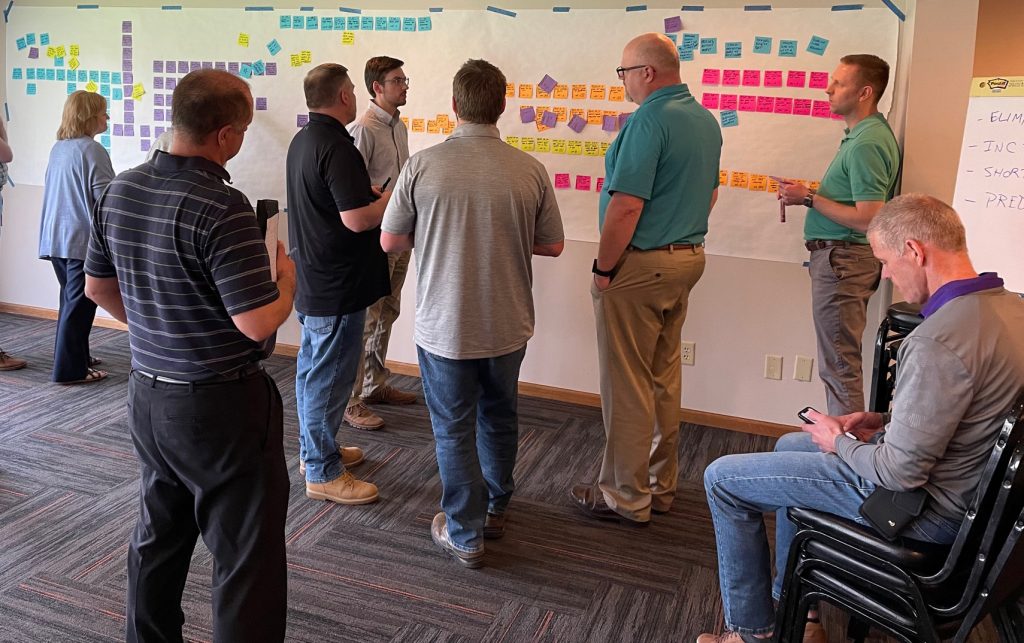
Don’t let your continuous improvement efforts end up just going through the motions. See how operations science helps you supercharge any process improvement efforts.
Week 16 – Operations Science and IT (Part 2)

Organizations see repeated occurrences of poor performance even after investing tremendous amounts of money and time in implementing new software. This does not have to be.
Week 15 – Operations Science and IT (Part 1)

Computers are much faster than people at processing information. This causes an excessive feedback problem that many don’t recognize. Companies invest millions and billions of dollars in IT but still end up with poor on-time delivery and high cost.
Week 14 – Managing for Optimal Performance
The operations science model for operations management provides quick improvements and long-lasting success.
Week 13 – Inventory Performance Curves, Secrets of Stock Inventory Control
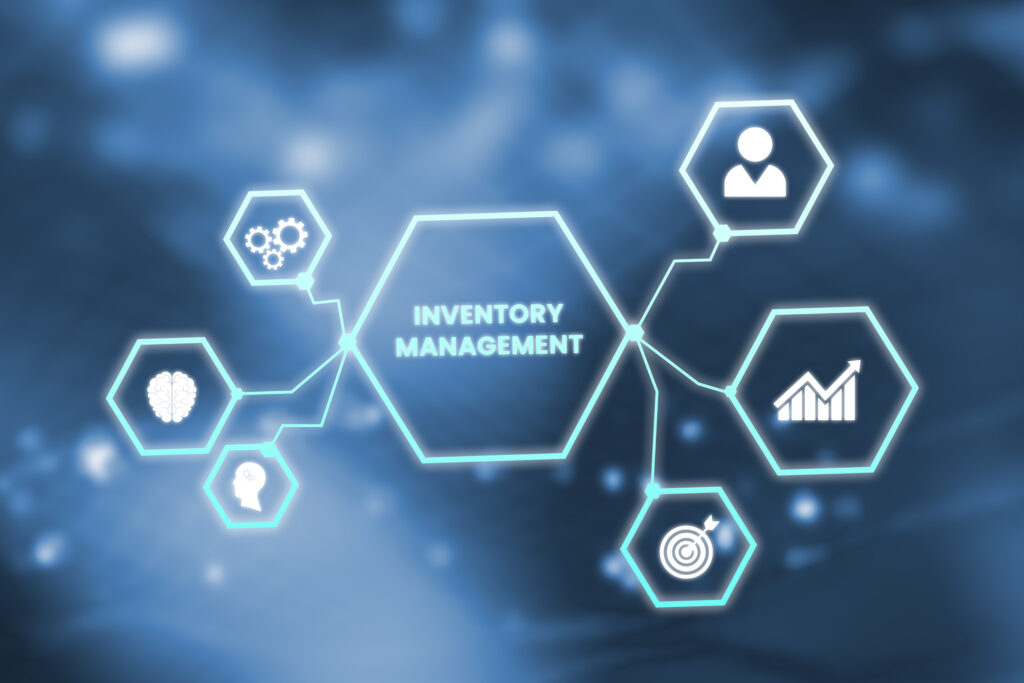
Efficient frontiers provide a great benchmark of where your inventory performance is versus where it could be.
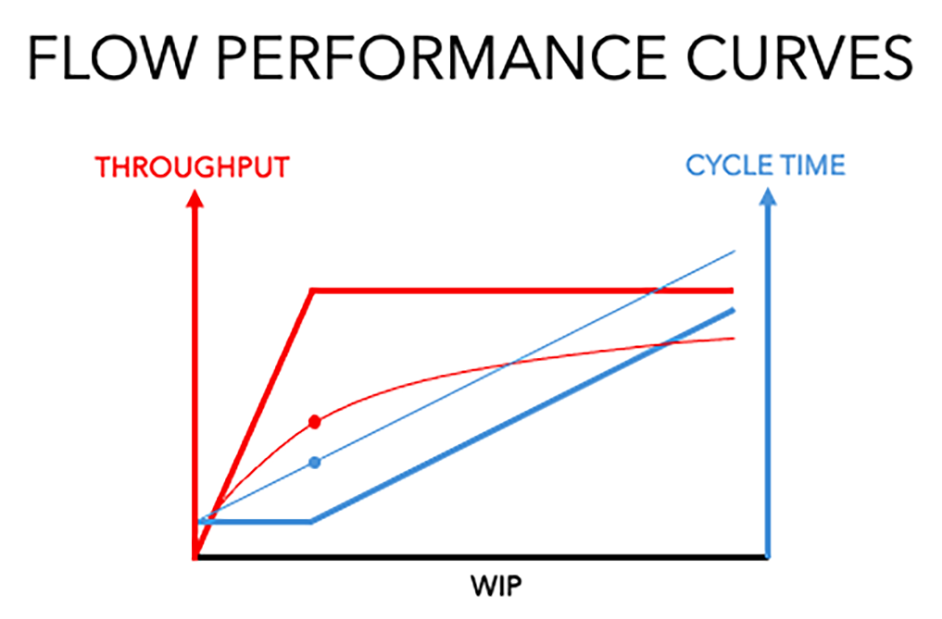
Week 12 – Flow Performance Curves, Secrets of WIP Control

See a powerful, practical WIP analysis and control tool, flow performance curves (FPC). FPCs apply to the virtual work (tasks) of projects and services as well as to the physical WIP of traditional manufacturing and provide quick insight that leads to rapid improvements.
Week 11 – Stock Inventory Management

In this second part video on the inventory buffer, we cover the fundamental drivers of stock inventory and provide three powerful hints for optimal inventory management.
Week 10 – Managing an Inventory Buffer
A description of the two fundamental types of inventory, the science that makes them different, and basic concepts for optimal control.
Week 9 – Planning the Capacity Buffer

Proper capacity planning requires that you, one, know how to calculate capacity and, two, understand the effects of variability and how to calculate those effects. Plan your capacity buffer with operations science to obtain best financial and customer service performance.
Week 8 – Operations Science and Budgeting
Operations science concepts connect financial statements to operations performance optimization. Jeff Bell, Managing Director of Arc Precision, shares his experience applying the concepts to successfully grow and manage a company.
Week 7 – The Fundamental Relationship
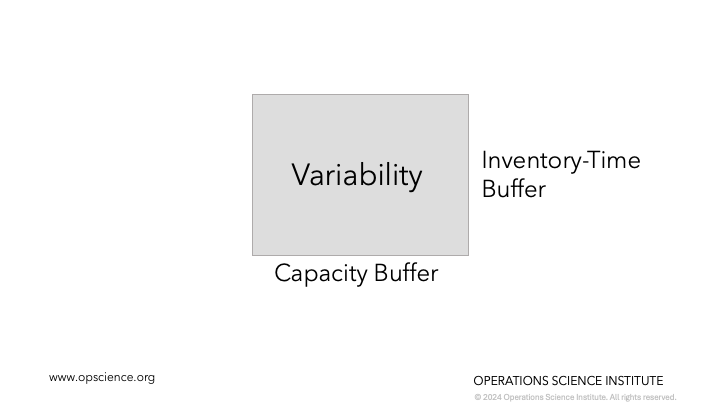
An explanation of the fundamental dynamics of buffers and variability that is central to operations science. Understanding this relationship is vital for people in operations to achieve predictable success in their careers.
Optimizing the Supply Chain With Existing Resources

Operations science concepts formed the foundation of a company transformation leading to tens of millions of dollars of savings. Gisele Roy, Senior Director of Supply Chain for Terumo, provides description of her experience working with supply chain and finance teams to vastly improve customer service and profitability.
Week 6 – Operations Science and People

This week’s episode explores what motivates people, how operations science helps leaders motivate their teams, and how operations science strengthens motivation within a team.
Week 5 – What is Operations Science?
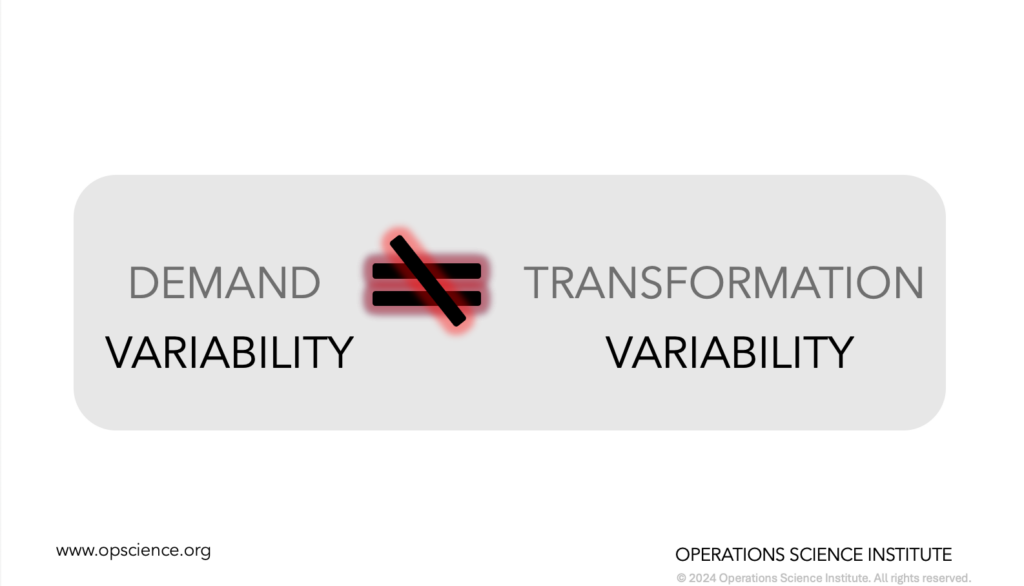
In this week’s episode, we provide the basic definition of operations science and describe its core concept. This is a fundamental requirement for understanding behavior of operations so leaders and workers can establish predictive control and accelerate success.
Week 4 – What is Operations Strategy?

A working definition of strategy and operations strategy. Building on last week’s video, we discuss characteristics required to establish objective, productive operations goals that align with operations science.
Week 3 – What is the Goal?

Evaluation of popular operations goals and a description of objective operations goals that align with operations science.
Week 2 – The Error of Forecasting

Common forecasting errors and practical tips for productive forecasting.
Week 1 – Use A Performance Envelope for Predictable Results
A fundamental challenge for all organizations is how to manage variability. We discuss the performance envelope, a fundamental element required to plan for and manage variability successfully.
An Antidote to Confusion – Operations Science and Pull

Companies struggle with “pull” systems in attempts to improve performance. A radical idea is proposed to resolve decades of ongoing confusion. 4 min read
Reducing Cost While Improving Nurse Satisfaction and Patient Care

This post demonstrates the power of operations science in healthcare services. Work with your existing investments in technology and continuous improvement—no new investment required. 7 min read