THE SCIENCE OF
HOW OPERATIONS BEHAVE
These are the books behind OSI's learning programs, and behind the results companies get from applying the science. Decades of research and practice, written to be used by anyone accountable for delivery, cost, or inventory.
BEFORE YOU LAUNCH ANOTHER INITIATIVE
WHY THE SAME PROBLEMS reoccur
Late orders. Late projects. Poor customer service. Inefficient use of capacity. Too much inventory. Insufficient profitability and cash flow. Unreliable or unsustainable results in improvement work. Many organizations treat these as separate problems and assign a different initiative to each. Turns out they all share common causes. The causes are known, measurable, and have been studied for decades, but rarely understood well and usually are not built into management practice. These books give you real-world reasoning behind how operations actually behave, so you can tell which changes will work before you spend a year finding out.
What leaders use the books for
- Understanding why an operation full of capable people working hard still misses on performance goals
- Reasoning about cause and effect instead of copying what worked somewhere else
- Creating accurate mental models used to focus people’s efforts and work more productively
These books explain why common management approaches fall short, and how to use operations science to get results that sustain over the long term. You strengthen existing efforts (Lean, Six Sigma, TOC, Agile or your tailored business system).
Most management literature hands you tools. These books give you the mental models to reason about cause and effect in any operating environment, manufacturing, services, or projects, so you can determine which tool to use and its most effective use. Additionally, they provide a comprehensive, practical framework for strategy formulation and implementation. For readers who want to go further, OSI also lists selected complementary works under Supplemental Works in Resources.
A guided tour of OSI advisory and training options available to harness the power of operations science.
Featured Work
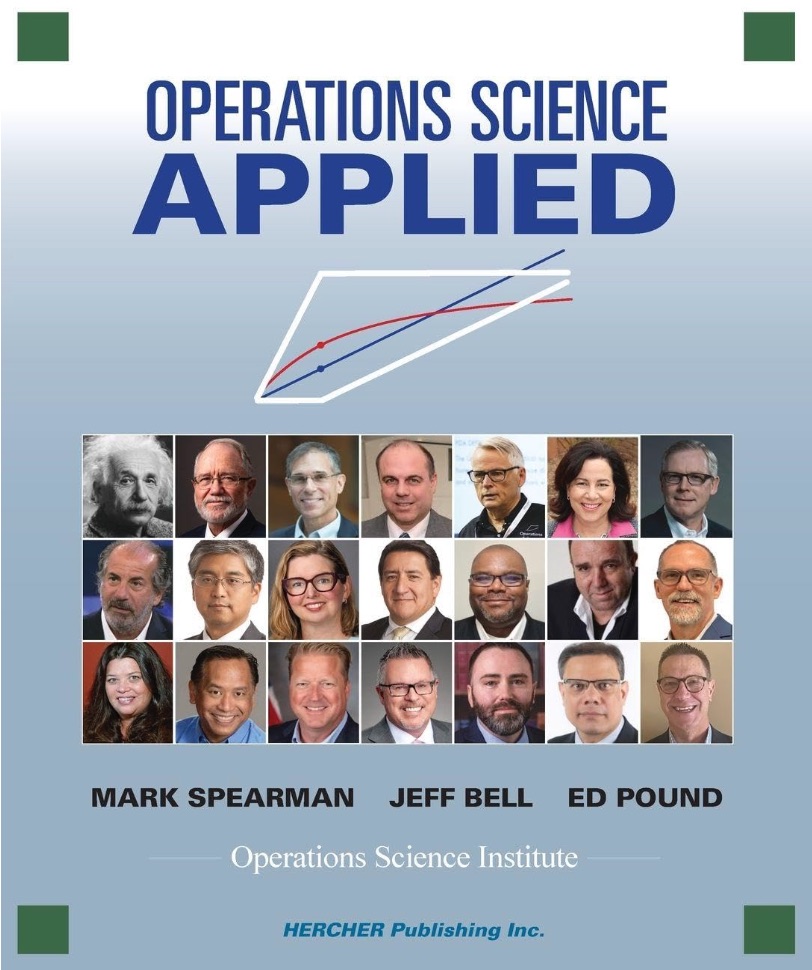
OPERATIONS SCIENCE APPLIED
One Framework for Manufacturing, Services, and Projects
If your operation misses performance goals and nobody in the room can reliably say why, start here. If you are doing pretty well and want to get better, start here. This book explains how flow, inventory, demand and variability interact to produce the performance you are getting and what to change to get different performance. It combines case studies from a wide range of industries with plain explanations of the underlying logic, so you can reason about your own operation or project rather than borrow someone else's conclusions. It does not replace Lean or Six Sigma or your existing continuous improvement efforts. It tells you how to make them more effective. Teams that add the science get more out of the improvement programs they already run: clearer reasoning about trade-offs, decisions coordinated across functions, and sustained gains in throughput, responsiveness, profitability, cash flow, and on-time delivery. Written for the people accountable for delivery, cost and inventory.
The faces on the cover are not stock photographs. Ok, Einstein is a stock photo. All the others are practitioners who used the science to change how their organizations run and advanced their own careers doing so. Some of them tell their stories in Part Five, Profiles in Leadership.
Paperback, Black and White
E-book, Color
— Larry Doerr, Emerson Electric Co. | Chief Operating Officer, StratasysI made note of the fact that I had not encountered ANY attempt to scientifically describe and manage operations/manufacturing prior to learning about the [Operations Science] textbook.
Foundational Works
THE TEXTS THAT BUILT THE FIELD
OSI's work builds on a broader body of foundational texts that introduced and developed the core ideas of operations science. These books established the fundamental concepts and frameworks that continue to inform modern management practice across manufacturing, services, projects, and supply chains.
A MANAGER'S HANDBOOK
Practical operations science concepts and practice for any operations manager. 370 pages. Published 2014 as McGraw Hill's lead business title.
SUPPLY CHAIN PRIMER
A high level discussion of operations science as applied to supply chains. 230 pages. Published in 2008.
The Textbook
Also known as the operations science "bible." It is provided the foundation for operations science concepts. 720 pages. First published in 1996. Third edition published 2011.
These books remain widely used by executives, managers, educators, and researchers. They form the conceptual bedrock that OSI programs, engagements, and advising are built upon.
Applications
How the Books Are Used
Organizations and individuals use these books in different ways depending on where they are in their journey with operations science.
- As preparation for learning programs
- As shared references for leadership teams
- As support for internal training and discussion
- As background for engagement work
The books are not prerequisites for OSI learning or engagements, but they provide useful context for those who want deeper grounding.
The OSI Ecosystem
Relationship to Learning and Engagements
OSI books, learning programs, and engagements are intentionally aligned. Each can stand on its own; together they reinforce one another.
ENGAGEMENTS
Provide fastest and safest approach to learning and applying concepts. Work side by side with operations science experts.
ONLINE COURSES
Self-guided study with the added benefit of videos, study guides and evaluations. Can be used by individuals or teams.
BOOKS
The foundations for operations science learning and valuable reference guides.
For readers interested in how these ideas are introduced and developed in OSI programs, see the LEARNING page. In addition to the books listed here, OSI also recommends selected Supplemental Works listed under RESOURCES.
— Bill Fierle, President & COO | Conax Technologies; Emerson Electric Co.Deep experiential knowledge and the application of the science of operations has allowed me to gain second-order intuition. By this, I mean the ability to easily see things in operations that others would not observe. This has made me a better leader of people at the several businesses I led—and lead—on a global basis.
How Will You Succeed?
Contact us to learn how operations science can be applied in your organization.